Do Solar Pool Covers Heat the Pool?
Yes, solar pool covers heat the pool by capturing the sun's warmth in their bubble layer and holding it in the water. The gain is real but modest, and it depends on sunlight, fit and how often the cover stays on.
On this page (10 sections)
- How does a solar pool cover heat the pool?
- How much warmer does the water actually get?
- Why does the bubble side face down?
- Does a solar cover work at night or on cloudy days?
- How much does fit and coverage matter?
- How should you install a solar cover so it heats?
- Do thicker covers heat better than thin ones?
- What about solar reels and daily use?
- Which solar cover suits your pool?
- Does a solar cover reduce chemicals and water loss too?
Yes, solar pool covers heat the pool by capturing the sun's warmth in their bubble layer and holding it in the water. The gain is real but modest, and it depends on sunlight, fit and how often the cover stays on.
The bubble side goes down, facing the water. That is the single detail that decides whether the cover works as a heater or just a sheet of plastic.
How does a solar pool cover heat the pool?
Sunlight passes through the cover and warms the top layer of water, while the bubbles trap that heat underneath. Sun2Solar says its cover uses the sun's power to raise water temperature by up to 15 degrees Fahrenheit.
The bubbles act like tiny greenhouses. Each one holds a pocket of air and lets UV rays through to the water below, so the pool collects heat all day.
The material is part of the job too. The Sun2Solar cover is made of resin with a thermal insulation layer and UV resistance built in, so the plastic does not break down fast under constant sun.
At night the same layer slows the escape of that stored warmth. That is why a covered pool often starts the next morning warmer than an uncovered one.
How much warmer does the water actually get?
The realistic gain is a few degrees over several sunny days, not 15 degrees overnight. The 15 degree figure is a best case in strong sun with the cover kept on.
Cloud cover, shade, air temperature and wind all cut into the result. A pool in full sun with steady coverage warms faster than one under trees or next to a windy open field.
Water depth matters too. A shallow pool warms quickly, while a large deep pool holds more cold water and takes longer to shift.
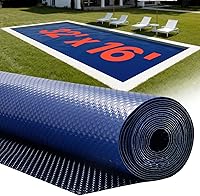
The cover's own design feeds into this. Sun2Solar's 1200 Series uses a solid blue pattern, and the brand says blue is effective at trapping heat and conserving chemicals, and that it resists fading when the water is properly balanced.
Why does the bubble side face down?
Bubbles down put the insulating air pockets against the water, where they hold heat best. A cover laid bubble side up loses much of its warming effect.
Sun2Solar's own guidance says to place the bubble side down into the water. The flat side faces the sky and lets sunlight through.
If you are unsure which side is which, feel the cover. The bumpy, textured face goes toward the water; the smooth face points up.
VINGLI gives the same instruction and adds a detail worth knowing. The bubbles can look a little deflated before the cover has sat in the sun, because the air inside them expands and contracts with temperature.
Let the cover warm up before you judge the fit.
Does a solar cover work at night or on cloudy days?
It doesn't make new heat after dark, but it slows the overnight cooldown. On cloudy days it protects the temperature the pool already has.
A clear night with the cover on will lose far less warmth than an open pool. That is where much of the "warmer water" people notice actually comes from.
During a grey stretch the cover still helps. It reduces evaporation, and evaporation is one of the biggest ways a pool loses heat.
VEVOR describes this as a two-part cycle. Its micro-bubble surface absorbs solar heat during the day and insulates at night, which lowers how hard any other heating has to work.
The cover is not a heater on its own; it is a lid that keeps the warmth you paid for.
How much does fit and coverage matter?
A cover that touches the water across the whole surface works far better than one with gaps. Loose edges let warm water meet cool air.
Aim for a cover trimmed close to the pool walls, with the bubbles in contact with the water. Overlap left over the edge can lift in wind and expose the surface.
Sun2Solar's covers have extra overlap and can be trimmed to fit around any protrusions. Round, oval and rectangular shapes all work if the edges sit close.
How should you install a solar cover so it heats?
Lay the cover bubble side down and trim the edges close to the pool wall. Read the maker's steps once before you cut.
Spread the cover across the surface on a calm day. Let it settle, then trim any excess in small amounts so you don't remove too much.
Our guide to how to install a solar pool cover walks through the trimming and storage steps in order. For inground pools, the solar pool cover for inground pools comparison helps match size and thickness.
Cutting an odd-shaped pool
If your pool is not a clean circle or rectangle, cut in stages. VINGLI notes that its cover can be trimmed with ordinary scissors to any shape, so mark a rough outline, cut wide, and keep testing the fit in the water.
Leave a little extra on the first pass. You can always take more off, but you cannot add material back once it is gone.
Do thicker covers heat better than thin ones?
Thickness changes how long a cover lasts and how well it insulates, but not whether it heats. A 16 mil cover holds warmth a little better than a 12 mil one.
The bigger difference is weight. A heavier cover is harder to pull off and on, which matters more if you use the pool every day.
For most homes a 12 mil cover is the practical choice. Go thicker for a long season or a pool that loses heat fast at night.
What the mil number tells you
The mil number is the thickness of the plastic sheet, and both of our examples use PE or resin films rated for outdoor sun. VEVOR's 16 mil cover is built to resist stretching and tearing, and the brand says it holds up to long sun exposure without cracking.
One caution from VEVOR: keep the cover out of highly acidic or heavily chlorinated water for the longest life. PE plastic survives sun well but harsh water chemistry is a different stress.
What about solar reels and daily use?
A reel makes it easy to uncover and re-cover the pool, which is what keeps the warming effect going. A cover that stays off half the time heats very little.
If you take the cover off and leave it in a heap, it spends the day cooling instead of warming. A reel keeps it rolled and ready for the next use.
Sun2Solar's covers fit most solar reels. Our guide to the solar pool cover reel covers sizes and mounting choices.
VINGLI recommends pairing its cover with its own reel to make the cover easier to put on and take off. Either way, the habit matters more than the brand: cover the pool at dusk and uncover it in the morning once the sun is up.
Which solar cover suits your pool?
Pick by pool size first, then by how much you want to handle the cover each day. Round 24 ft pools are the most common size for a solar cover.
For above ground pools, the solar cover for above ground pool picks cover the common round sizes. If you want an easy-to-roll option, the reel guide above pairs well with any of these covers.
One housekeeping note from VINGLI applies to any cover: wash and dry it before storing, and roll it up after use rather than folding it flat. All three covers here are hand wash only.
Avoid leaving the cover in contact with strong pool chemicals right after opening, which VINGLI says to keep clear for at least 24 hours.
Does a solar cover reduce chemicals and water loss too?
Yes, and that saving is part of the heating story. A cover cuts evaporation by up to 95 percent, which is the same 95 percent figure both Sun2Solar and VEVOR use.
Less evaporation means less water to top up, and fewer chemicals drifting off into the air. Sun2Solar frames it as cutting back on chemical use and refills, while VEVOR notes the cover slows how fast chemicals evaporate.
The debris side matters as well. A cover stretched over the surface stops leaves and dirt from landing in the water, so the filter has less to clear and the pool stays clear between cleanings.
VINGLI adds a dustproof layer to the same idea.
So do solar pool covers heat the pool? Yes, within limits.
They warm the water in sunny spells, hold the heat overnight, and cut evaporation, but they don't replace a heater. Buy one that fits close, keep it on as much as you can, and let the sun do the rest.
Frequently asked questions
How long does a solar pool cover take to warm the water?
Expect several sunny days of full coverage before you notice a difference. Sun2Solar says its cover can raise water temperature by up to 15 degrees Fahrenheit, but that is a best case in strong sun with the cover kept on.
Does a solar cover heat the pool at night?
No, it doesn't create heat in the dark. What it does is slow the escape of warmth already stored in the water, which keeps the pool from cooling as fast overnight.
Is a thicker solar cover always better?
Not always. Thicker mil counts last longer and insulate a little more, but they weigh more and cost more.
A 12 mil cover suits most homes; go to 16 mil for longer seasons.