What Color Solar Pool Cover Is Best? Clear, Blue, Black
Clear, blue and black solar pool covers can all help trap heat and reduce evaporation. Choose by how you want the cover to balance sunlight, heat retention and visibility, then check the cover's fit and bubble-side orientation.
On this page (4 sections)
The best color solar pool cover depends on how you want sunlight and heat to reach your pool. Clear covers let sunlight through, while blue covers are a common choice for heat retention; a black layer may be part of a two-color design.
Color is only one part of the choice. Bubble construction, thickness, fit and whether you can handle the cover easily also matter.
If you want to understand what a solar cover can do overall, start with our guide to how solar pool covers work. Here, we compare clear, blue and black options and explain what to check before you buy.
What color solar pool cover is best for your pool?
Choose clear if you want sunlight to pass through, and compare blue or black designs when heat retention is your main concern. The right choice depends on the cover's full design, not its color name alone.
A clear cover can be a straightforward pick when you want light to reach the water. Sun2Solar says its clear cover traps heat after the sun sets, and its product information says blue covers are effective at trapping heat and conserving chemicals.
Blue covers are widely sold and can be easier to compare across thicknesses and sizes. Some covers combine blue and black layers, so check whether the colors describe different sides or a particular construction.
Black may look like the obvious choice for absorbing sunlight, but color alone doesn't show how much heat a cover will transfer to the water. Look at the maker's explanation of the cover's design, then compare thickness and fit.
| Color | A practical reason to consider it | What to check |
|---|---|---|
| Clear | Sunlight can pass through the cover | Heat-retention and bubble details |
| Blue | A common option for trapping heat | Thickness, material and fit |
| Black or blue and black | A two-color design may appeal if you want a dark layer | Which sides are which and how the cover is built |
These are starting points, not a performance ranking. Your pool's sun exposure, local weather and cover use can affect the result.
Is a clear solar pool cover best for sunlight?
A clear solar pool cover is a good match if you want sunlight to reach the water. Sun2Solar says its clear cover uses thermal bubbles to capture the sun's UV rays and retain heat.
The Sun2Solar Clear 16 x 32 ft Solar Cover is a clear, 12 mil option. Sun2Solar says its solar covers can raise water temperature by up to 15 degrees Fahrenheit, but conditions affect results.
This option may suit you if your pool gets useful sun and you want a clear cover. Before choosing, make sure the rectangle matches your pool's dimensions and check how much overlap you'll need for trimming.
Is a blue solar pool cover better for heat retention?
A blue cover is a sensible option to compare when heat retention is a priority. Sun2Solar says blue solar covers are effective at trapping heat, while the VEVOR blue cover uses a bubble design that VEVOR says helps absorb heat during the day and reduce heat loss at night.
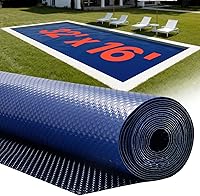
The VEVOR 32 x 16 ft 16 Mil Solar Cover is blue and made from PE. VEVOR describes it as a cuttable cover for inground and above-ground pools.
Its 16 mil thickness may be useful if you want to compare thicker covers. For an explanation of what thickness changes, see our guide to 12 mil vs 16 mil solar pool covers.
What does a blue and black solar pool cover mean?
A blue and black cover combines two colors in one design, so check how its layers are arranged before buying. The VEVOR blue and black cover has a 16 mil bubble design that VEVOR says helps retain heat and slow heat loss.
VEVOR says the cover can be trimmed for irregular pool shapes and is made from PE. Its two-color appearance may suit you if you prefer a darker layer, but the available information does not specify which side should face up.
For any solar cover, confirm the bubble-side orientation in the instructions before placing it on the water. Don't assume the color tells you which side faces the pool.
Does color matter more than thickness and fit?
Thickness and fit can matter as much as color when choosing a solar cover. A cover that doesn't fit your pool well may leave water uncovered, while thickness helps you compare the construction of different options.
The three covers here differ in both color and thickness: the Sun2Solar clear cover is 12 mil, while the two VEVOR covers are 16 mil. That makes them useful examples, but it doesn't isolate color as the reason one might suit you better.
Measure the pool's water surface and compare it with the cover dimensions. Some covers can be trimmed, but start with enough material to cover the full pool before cutting.
If you're unsure how much material to allow, read our guide on measuring for a pool cover. For a closer look at fit and trimming, see how to cut a solar pool cover to fit.
How do you choose between clear, blue and black?
Pick the color that matches your priorities, then confirm the details that affect everyday use. The checklist below can help you narrow the choice.
- Choose clear if you want sunlight to pass through and prefer a transparent look.
- Compare blue covers if you want a familiar solar-cover option with maker claims about heat retention.
- Consider a blue and black design if its construction suits you, but verify the intended orientation.
- Compare thickness and material rather than treating color as a measure of durability.
- Check the pool dimensions, shape and allowance for trimming.
- Think about removal and storage, especially if you'll take the cover off often.
A reel can make positioning and removal easier. Sun2Solar says its covers fit most solar reels, though a reel isn't required; our guide to solar pool cover reels explains what to consider.
Which solar pool cover color should you choose?
Choose clear if sunlight passing through matters most, and compare blue or blue and black covers if heat retention is your priority. Then make the final decision by checking thickness, dimensions, bubble orientation and whether the cover can fit your pool.
The Sun2Solar clear cover is a 12 mil option for a 16 x 32 ft rectangle. The VEVOR blue and blue and black covers are 16 mil options for the same listed rectangle size, with VEVOR describing both as trim-to-fit designs.
Color can help narrow your search, but the cover's construction and fit determine whether it works for your pool. Compare the options in our guide to solar covers and reels if you want to see more choices.
Frequently asked questions
Which color solar pool cover is best for heat?
There is no single best color for every pool. Clear covers let sunlight pass through, while blue covers are commonly chosen for heat retention.
Compare the maker's claims, bubble construction, thickness and fit, since color alone does not tell you how a cover will perform in your pool.
Is a clear or blue solar pool cover better?
A clear cover may suit you if you want sunlight to reach the water, while a blue cover offers a familiar balance of heat retention and coverage. The Sun2Solar clear cover is described as trapping heat, and its product information says blue covers are effective at trapping heat and conserving chemicals.
Does a black solar pool cover heat water faster?
Color by itself does not tell you how quickly a cover will warm your pool. The blue and black VEVOR cover uses a 16 mil bubble design that VEVOR says helps retain heat, so compare its construction and fit along with its color.
Should the bubbles face up or down on a solar pool cover?
Put the bubble side down against the water so the cover can work as intended. Sun2Solar gives this orientation for its solar covers.
Follow the instructions for your specific cover when you install it.