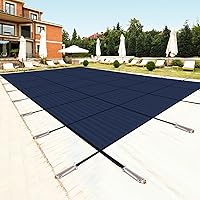
Why Does My Pool Cover Have Holes?
Your pool cover has holes because sun, ice, sharp edges and stretching wear the material thin, and some covers are made with small holes on purpose. A hole in the top surface of a solid cover lets water drain, while a tear at an edge or seam usually means wear or damage.
On this page (9 sections)
- Why does my pool cover have holes?
- Which holes are supposed to be there?
- How does sun and weather break a cover down?
- How do sharp edges and debris make holes?
- Why do water and ice tear covers so easily?
- Is my cover damaged, and when should I replace it?
- What does a sturdier cover do differently?
- How do you stop a new cover from getting holes?
- The short answer on cover holes
Your pool cover has holes because sun, ice, sharp edges and stretching wear the material thin, and some covers are made with small holes on purpose. A hole in the top surface of a solid cover lets water drain, while a tear at an edge or seam usually means wear or damage.
Finding a hole mid-panel is different from finding one on day one. The two cases call for different fixes, so start by working out which one you have.
Why does my pool cover have holes?
Most holes come from wear or a feature, and the two look different. A small, evenly spaced hole in the middle of a solid cover is often a drain point.
A tear along a seam, a ragged edge or a burst in the middle of a panel is damage.
Sun exposure is the slowest cause. Ultraviolet light breaks down the plastic in a cover season after season, and the fabric goes brittle before it tears.
Ice is the fastest. Water that freezes on top of a cover with an ice sheet around the pool can tear the material in one cold snap.
Sharp edges and abrasion come next. Deck edges, rough coping, exposed corners and grit under the cover all rub the same spot until it fails.
Stretching and heavy water load show up as seam splits. A cover that holds a deep puddle carries a lot of weight, and the stitching or heat seams give way first.
Which holes are supposed to be there?
Small drain holes in a solid top cover are a feature, not a fault. They let rainwater pass through or off the cover so it doesn't stand on top and pull the material down.
A mesh cover works the same way across its whole surface: the weave lets water through, so you won't see drilled holes, just a porous panel. The mesh vs solid pool cover comparison explains which one suits your pool and how each handles rain.
Check the pattern before you worry. Tidy, evenly placed holes that show up when the cover is new are meant to be there.
A single ragged hole in the middle, or holes that multiply each winter, is a different story.
How does sun and weather break a cover down?
UV light makes the fabric brittle, and cold makes it crack. Together they turn a flexible cover stiff, and a stiff cover tears instead of stretching.
The top surface takes the most sun. A cover left on year-round and uncovered by shade fades first, then cracks at the points where it folds over the edge.
Winter adds freeze-thaw cycles. Water in a pinhole freezes, expands and widens the gap, so a tiny flaw can open up over one season.
Heat is not the only issue. A cover stored wet or folded with grit trapped inside can grow mildew and weak spots, so dry it fully before storage.
A cover's coating matters as much as its thickness here. A cover with an LDPE coating resists solar UV rather than soaking it up, which is why coated fabric tends to outlast a plain tarp of the same weight.
How do sharp edges and debris make holes?
Anything that rubs a cover in the same spot will wear through it. Deck corners, screw heads, planters and exposed bolts are common culprits.
Leaves, twigs and grit trapped on top act like sandpaper when wind moves the cover. The movement is small, but it repeats all winter.
Branches hanging over the pool are another source. A limb that brushes the cover in wind can pierce a stretched panel.
A cover that's slightly too small pulls against every anchor point. That tension wears the fabric at grommets, straps and seams.
If sizing is in doubt, the steps in how to measure for a pool cover settle it before you buy.
Why do water and ice tear covers so easily?
Standing water is the main reason covers fail in winter. A single deep puddle weighs far more than the cover was designed to hold, and ice locked around the cover has nowhere to move.
When water freezes on top while the pool surface freezes below, the ice grabs the cover. As temperatures shift, the ice pulls and the fabric tears.
Dealing with the water is the simplest fix. A cover pump lifts standing water off before it becomes a load, and a pump that starts itself saves you trips outside in bad weather.
The WAPC250 is a 1/4 HP pump with a flow rate of up to 3,000 gallons per hour through a 1-1/4 inch hose, and its iSwitch handles the on and off cycles. A 25-foot cord and a 25-foot pull-to-shore rope help position it without dragging the cover.
Its protection circuit shuts the motor down if a locked impeller stalls it, then checks back twice a day for 12 hours before giving up, which matters when ice or debris jams the pump.
The Acquaer pump turns on when it detects 2 inches of water and runs 60 seconds past its 2/5 inch shutoff. Its built-in temperature control protects the motor when water runs short.
Either pump takes the weight off the cover and cuts the freeze risk. Clear the water before the first hard freeze and the ice has far less to grab.
Is my cover damaged, and when should I replace it?
Judge the hole by where it is and how fast it grows. A single small drain hole is normal; a hole that appeared this winter or is widening at a seam means the cover is failing.
Patch small tears promptly to stop them spreading. Clean the area, dry it fully and apply a cover patch that suits the material.
Look at the whole cover, not just the hole. Chalky, stiff or faded fabric across the panel tells you the material is near the end of its life.
A cover with several patches, sagging seams or a tear over a few inches is a replacement job. A damaged cover no longer does its main tasks: keeping debris out and holding up as a barrier.
What does a sturdier cover do differently?
A better-built cover resists the same forces longer. Higher fabric weight, stronger seams and UV-resistant coatings all delay the day a hole appears.
The Yankee Pool Pillow 24 ft round cover is made with a 14 x 14 scrim count and 185 GSM density. Its LDPE coating resists UV, and the maker says it handles temperatures from -10 F to 180 F.
A steel-core cable through reinforced metal grommets holds the cover in place, and a molded winch tightens it. That snug fit limits the wind movement that wears covers at the edges.
The black underside also blocks light from reaching the water, which keeps growth down while the pool sits closed.
It suits above-ground pools of that size. If you're deciding between cover styles, safety cover vs winter cover helps you choose the right type first.
How do you stop a new cover from getting holes?
Fit, water control and careful storage prevent most new holes. A cover that's the right size, pumped dry and stored clean lasts far longer.
Clear the deck of sharp debris and trim back branches before closing. Repair any flat spots on the coping that could rub the fabric.
Keep the water level close to the cover so ice can shift with the surface. Don't leave standing water on top heading into a freeze.
Set up the install properly from the start. The steps in how to install a winter pool cover cover fit, tension and anchoring, which are where many tears begin.
At the end of the season, dry the cover fully and store it away from pests and sunlight. Fold rather than stuff it, and keep grit out of the folds.
The short answer on cover holes
If you're still asking why does my pool cover have holes, start with the pattern. Even, small holes in a solid cover are usually drain points by design; ragged holes, seam splits and tears are wear from sun, ice, sharp edges or standing water.
Fix the cause as well as the hole. Pump off standing water, keep the fit snug and clear sharp edges, and patch small tears before they spread.
A cover that sits dry, fits right and is handled gently is the one that lasts.
Our score weighs specs, features and buyer feedback against what you're shopping for. Start with the pump: a self-starting model keeps the water off the cover, which is the single biggest thing you can do to stop new holes forming.
Frequently asked questions
Can I patch a hole in my pool cover?
Yes, small holes on a solid cover can usually be patched with a cover repair kit or a matching vinyl patch, once the surface is clean and dry. A tear longer than a few inches, or any hole on a safety cover, is better handed to a cover professional.
Are holes in a winter cover normal?
Small drain holes in a solid winter cover are normal and help rainwater pass through or off the cover. Holes that appear mid-panel, spread at seams, or grow each season point to wear rather than design.
Does a hole in a pool cover make it unsafe?
A hole weakens the cover and lets water pool on top, which adds weight. Don't rely on any cover with damage as a safety barrier; keep children and pets off it and repair or replace it before the season.
How do I stop ice from tearing my pool cover?
Keep the water level close to the cover so ice can move with the surface, and pump off standing water before it freezes. Ice that freezes into the cover while water sits on top is the most common cause of a new tear.