Mesh vs Solid Pool Cover: Which Suits Your Pool? (October 2026)
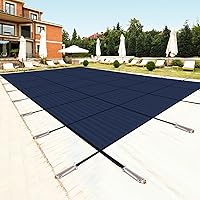
Choose mesh for natural drainage and solid for blocking more sunlight and water from entering the pool. Your pool layout, debris load and willingness to manage water on top help decide which cover suits you.
On this page (6 sections)
Choose mesh for natural drainage and solid for blocking more sunlight and water from entering the pool. In this mesh vs solid pool cover comparison, drainage, debris control and upkeep are the main differences.
Mesh allows rainwater and snowmelt through, which can keep water from sitting on the cover. Solid fabric blocks more sunlight and debris, but water can collect on top and need removal.
Both types can be made as safety covers. Check the exact cover's fit, installation system and instructions, since the word “mesh” or “solid” alone doesn't tell you whether a cover suits your pool.


Mesh vs solid pool cover: which should you choose?
Choose mesh if you want water to drain through; choose solid if blocking sunlight and debris is the priority. Your choice also affects what reaches the pool and what maintenance happens during winter.
Mesh does not mean that nothing enters the pool. Water passes through the weave, and finer debris may pass with it.
Solid fabric creates a more complete barrier against light and debris. Since rain stays on top, plan for removing accumulated water according to the cover instructions.
When does mesh make more sense?
Mesh makes sense when natural drainage matters and you want less standing water to manage on the cover. It can be a practical fit for pools that get regular rain or snowmelt.
The tradeoff is that water passes into the pool. Leaves and larger debris are blocked, but fine material can still get through the fabric.
Our guide to types of pool covers explains how winter and safety covers differ from solar covers. Use it if you are still deciding what job the cover needs to do.
When does solid make more sense?
Solid makes sense when you want to limit sunlight and keep more debris out of the pool. That barrier can help reduce what falls directly into the water during the off-season.
It needs a plan for water that collects on top. A pump or another method may be needed, depending on the cover and the maker's care instructions.
See our guide to keeping water off a pool cover for ways to manage pooling. Don't assume a solid cover can drain on its own.
How do drainage and spring cleanup differ?
Mesh sends rainwater into the pool, while solid keeps it above the cover until you remove it. Neither design removes all spring maintenance.
With mesh, consider how much runoff and fine debris enter the pool over winter. You may need to check the water and clean the pool before opening.
With solid, inspect the cover for collected water and follow its care instructions. Keeping the cover clear can reduce the weight and standing water it must support.
The right choice depends on the kind of work you prefer. Mesh moves water through; solid requires more attention to water on top.
Does mesh or solid block more sunlight?
Solid blocks more sunlight than mesh, which lets some light through its weave. Reduced sunlight can help limit algae growth, though the cover type alone cannot guarantee clear water at opening.
A mesh safety cover can still reduce sunlight penetration. The VEVOR mesh option describes reduced light as one way it helps limit algae growth.
Don't treat either style as a substitute for winterizing the pool correctly. Follow your pool and cover instructions for water level, chemicals and seasonal care.
Which cover fits your pool and deck?
Choose by the cover's stated pool dimensions and shape, then confirm step cutouts and anchor placement. A close match matters because a safety cover relies on the right fit and tension.
Measure the pool, including any steps or irregular edges, and check the usable deck area. Our guide on how to measure for a pool cover walks through the measurements to take before ordering.
The VEVOR cover is designed for an 18 x 36 ft pool with a 4 x 8 ft center step. The CIDNN mesh cover is sized for a 16 x 32 ft rectangular pool.
The Lynkron solid safety cover is sized for a 20 x 40 ft rectangular pool. These are different sizes, so compare the cover that matches your pool rather than treating the products as interchangeable.
What do safety cover details change?
A safety cover must fit the pool and be installed with its specified hardware. Look at the complete system, including the cover dimensions, anchors, springs or straps, and installation instructions.
The VEVOR and CIDNN covers list brass anchors and steel springs. The VEVOR cover also includes a 4 x 8 ft center step cutout, while the CIDNN cover is for a 16 x 32 ft rectangle.
The Lynkron cover includes a hardware kit and uses double strapping and triple stitching. Its description calls it a safety cover, but the details do not give a certification or load rating.
VEVOR states that its mesh cover is ASTM F1346 and UL certified and supports up to 500 lb. Confirm the certification details for any cover you consider, and follow the manufacturer’s installation instructions.
A safety cover is not a substitute for active supervision around water. Keep access to the pool controlled and follow local safety requirements.
Which cover is easier to care for?
Mesh needs less attention to water sitting on top; solid needs a way to remove it. Both need inspection and proper storage between seasons.
Check the cover after storms and follow its maker's instructions for snow, debris and tension. Avoid stepping on a cover unless its documentation specifically permits it.
Before storage, remove debris and let the cover dry as directed. Our guide to cleaning a pool cover before storing it covers basic seasonal care.
If a cover collects water, don't let it sit unattended. Our pool cover pump guide explains the equipment category for managing standing water.
Which mesh or solid pool cover is right for you?
Pick mesh if you value natural drainage and can handle water entering the pool; pick solid if you want to block more light and debris and can manage water on top. Then choose a model that matches your pool's shape, dimensions and step layout.
For an 18 x 36 ft pool with a 4 x 8 ft center step, compare the VEVOR mesh cover. For a 20 x 40 ft rectangle where a solid barrier is preferred, consider the Lynkron; for a 16 x 32 ft rectangle, the CIDNN mesh is the size match.
For a wider comparison of pool cover styles, start with types of pool covers. Our score weighs specs, features and buyer feedback against what you're shopping for.
Sources:
Frequently asked questions
Does a mesh pool cover let rainwater into the pool?
Yes. Mesh lets rainwater and snowmelt pass through, so water can reach the pool while leaves and larger debris are blocked.
Fine debris may also pass through, and the water can need more attention at opening than water under a solid cover.
Does a solid pool cover need a pump?
A solid cover does not drain rainwater through its fabric, so water can collect on top and may need to be removed. Follow the cover maker's care instructions, and see our guide to keeping water off a pool cover for practical options.
Which pool cover keeps a pool cleaner over winter?
A solid cover blocks more sunlight and debris from entering, while mesh drains water naturally but can let fine debris pass through. The cleaner choice depends on local leaves, cover fit and how much spring cleanup you're willing to do.
Are mesh and solid safety covers installed the same way?
Both styles need to match the pool and use the correct anchors and installation method for that cover. Check the pool measurements, shape, step areas and deck before buying, then follow the instructions for the exact cover.