Do Pool Covers Help With Evaporation?
Yes, pool covers help with evaporation, and a lot. A cover that sits on or over the water blocks the moist air from escaping, and makers say the better ones can cut evaporation by up to 95 percent.
On this page (8 sections)
- How does a pool cover stop water from evaporating?
- Which cover types block the most evaporation?
- How much water does a covered pool really save?
- Why does fit matter more than thickness?
- Which covers suit everyday evaporation control?
- Do you need a reel to get the water-saving benefit?
- How do you get the most evaporation savings from a cover?
- Which type should you choose for your pool?
Yes, pool covers help with evaporation, and the effect is large. A cover that sits on or over the water traps the moist air underneath, so less water escapes into the dry air above.
Makers of solar covers say evaporation drops by up to 95 percent, and that number is the main reason many pool owners buy one.
The rest of this guide covers which covers block the most water loss, how much you can realistically expect to save, and the mistakes that undo the benefit. The short version: fit matters more than anything else.
How does a pool cover stop water from evaporating?
A pool cover works by putting a physical barrier between the water and the air. Evaporation happens when water molecules at the surface gain enough energy to escape as vapor.
A cover blocks that path, so the vapor stays under the sheet or escapes only slowly around the edges.
The material matters less than the seal. A cover that lies flat on the water and overlaps the pool edge keeps most of the moisture in.
One that sits loose, gathers in the middle or flaps in the wind leaves gaps for vapor to rise through.
This is why a cover's stated evaporation figure assumes a good fit. Sun2Solar and VEVOR both say their solar covers cut evaporation by up to 95 percent, and both designs depend on the cover lying in full contact with the water.
Which cover types block the most evaporation?
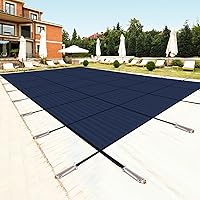
Solar covers and solid winter covers block the most water loss, while mesh covers let some vapor through. Floating bubble covers and solid safety covers both create a near-complete seal.
Mesh is the weakest option for water saving, because it is designed to let rain and vapor pass.
Here is how the main cover types compare on evaporation:
- Solar bubble covers: sit directly on the water, cheap to buy, and claim up to 95 percent evaporation reduction.
- Solid winter covers: fully seal the pool for the off season and stop almost all evaporation.
- Safety covers (solid): anchored over the pool, they keep water in and people and debris out.
- Mesh covers: let water and some vapor through by design, so they save less.
- Automatic and reel covers: the cover type still decides the seal, but a reel makes daily use realistic.
Floating covers only work when they are actually on the pool. A solar cover rolled up on a reel does nothing for evaporation, so the cover you will put on every night matters more than the one with the best numbers.
Our guide to mesh vs solid pool cover digs into the water and drainage trade-off in detail.
How much water does a covered pool really save?
Expect to save most of your normal top-up water, not all of it. If your pool loses about an inch of water a week to evaporation in hot weather, a well-fitted cover can cut that to a fraction of an inch.
The exact figure depends on sun, wind, humidity and how often the cover is on.
Wind is the biggest single factor. A breezy, exposed yard evaporates far more than a sheltered one, so the same cover saves more water there.
Hot, dry, sunny days also drive losses up, and those are the days a cover earns its keep.
The savings show up in three places: fewer refills, less chemical replacement and less heat loss. A cover that stops 95 percent of evaporation also slows the loss of chlorine and stabilizers, which is why pool owners often notice steadier water chemistry.
Why does fit matter more than thickness?
A snug cover saves more water than a thick one that doesn't fit. Gaps at the edge, folds across the surface and a cover that rides up in the wind all let vapor escape.
A thinner cover cut to the pool's shape beats a heavy one that leaves the edges open.
This is where many first-time buyers slip up. A round solar cover bought in the wrong diameter will bunch or leave a water gap.
The fix is simple: measure the pool's widest point and follow the steps in our guide to how to measure for a pool cover before ordering.
For round above-ground pools, an oversized solar cover trimmed to the rail usually beats a perfect-looking off-the-shelf size that sits slightly short. The extra overlap also helps hold the cover down when a breeze picks up.
Which covers suit everyday evaporation control?
A solar cover is the practical pick for daily use, and a reel makes the difference between using it and leaving it rolled up. A bubble cover keeps heat in and water loss down, costs less than a winter cover, and is light enough to pull off each morning.
Sun2Solar says this cover can raise water temperature by up to 15 degrees and keep warmth in overnight. It is built for above-ground and in-ground pools, and the extra material lets you trim it around rails and fittings.
The bubble side goes down in the water.
VEVOR says this 16 mil cover also reduces evaporation by up to 95 percent. The thicker bubble layer is aimed at people who want more durability from a cover that stays outside.
VEVOR notes it should stay out of highly acidic or heavily chlorinated water to last longer.
Do you need a reel to get the water-saving benefit?
No, but a reel decides whether the cover is on the pool when evaporation is worst. A solar cover only blocks evaporation while it floats on the water.
Rolling it by hand is slow, so many covers end up folded in a corner.
VINGLI's reel uses aluminum tubes and stainless legs, with a one-hand crank and a mechanical lock. It fits pools up to 14 ft wide, and you cut the cover to fit whatever shape your pool is.
The wheels make it easy to move out of the way. The point is speed: a cover you can deploy in a few seconds is a cover that actually sits on the water every night.
How do you get the most evaporation savings from a cover?
Keep the cover on whenever the pool is not in use, and remove it during the hottest part of the day only if you want to swim. A cover left off overnight loses the most water and heat, so the habit that matters most is covering the pool before you go inside.
A few practical habits add up:
- Lay the cover flat so no water pools in the middle.
- Trim or overlap the edges so the cover reaches the rail.
- Remove leaves and debris before they sink and cloud the water.
- Store the cover out of direct sun when it is off the pool.
- Check the water level weekly, covered or not.
If your pool is closed for the season, the cover does the same job all winter. A solid cover stops nearly all evaporation while the pool sits idle.
Our walkthrough on how to install a winter pool cover covers the anchoring steps so the cover stays tight and keeps working.
Which type should you choose for your pool?
Pick a solar cover for daily evaporation control, and a solid winter cover if the pool is closed for months. A solar cover handles the swim season at low cost, while a solid cover seals the pool through the off season.
If you are unsure which fits your situation, our comparison of safety cover vs winter cover explains the difference in anchoring and use.
Choose the Sun2Solar 24 ft round cover if you have a 24 ft round pool and want an inexpensive daily cover to trim for a tight edge. Choose the VEVOR 16 mil cover if an 18 ft pool needs a thicker cover that stays outside.
Add the VINGLI reel if your pool is in-ground and up to 14 ft wide, because a cover you can roll out quickly is the one that saves water every night.
The answer to do pool covers help with evaporation is a clear yes, as long as the cover fits and stays on the pool. Measure first, buy a cover that seals the surface, and keep it on when the pool is empty.
That routine saves water, chemicals and heat all season.
Frequently asked questions
How much water can a pool cover save each week?
Makers of solar covers say evaporation drops by up to 95 percent, so a typical pool that loses an inch or more a week can lose far less. The real number depends on your cover's fit, wind, sun and water temperature.
Does a pool cover work in windy weather?
Wind is the biggest driver of evaporation, so a cover that flutters or blows back loses much of its benefit. A cover that sits tight on the water or a firmly anchored winter cover does more in exposed yards than a loose floating sheet.
Do covers stop evaporation in winter when the pool is closed?
Yes. A closed pool still loses water to evaporation, and a solid winter cover stops nearly all of it.
A mesh cover lets some vapor through by design, so it saves less water than a solid one over the off season.
Do I still need to top up the pool with a cover on?
You will top up less often, but not never. Splash-out from swimmers, rain, leaks and backwashing the filter all change the water level, so keep checking it and add water when it drops below the skimmer.