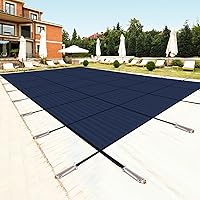
How Much Does a Pool Safety Cover Cost?
A pool safety cover usually costs less than most owners expect, and the final figure comes down to size, mesh or solid fabric, anchors and hardware, and whether your pool needs a custom shape or step cutout. A standard rectangle mesh cover sits in the lower to middle range; solid fabric and custom fits push the cost up.
On this page (9 sections)
- What sets the price of a pool safety cover?
- Mesh vs solid fabric: which one costs more?
- What do size and shape add to the bill?
- Are anchors and installation hardware included in the price?
- How do certified covers earn their price?
- How much do custom shapes and step cutouts add?
- Which covers keep the cost down?
- How can you lower the cost without cutting safety?
- So what should you budget for a pool safety cover?
A pool safety cover typically costs less than a custom hardtop or a full winter service, and the figure depends on size, fabric type, hardware and shape. The main cost drivers are square footage, mesh or solid fabric, the anchor kit, and any custom cutouts, so a plain rectangle mesh cover is the cheapest sensible buy.
This guide breaks down each cost driver in plain terms. It also shows which covers keep the price down and where a custom fit is worth paying for.
What sets the price of a pool safety cover?
The biggest cost driver is the size of your pool, measured as the cover's full footprint rather than the water area. A cover needs about 2 ft of overlap on every side to reach the deck and anchor points.
So a 16 x 32 ft pool needs a cover around 18 x 34 ft, and that extra border adds real square footage. Fabric type comes next: mesh is lighter and needs less material than solid fabric.
Hardware and custom cutting finish the list.
Brand and certification add a little more. A cover built to a recognized safety standard costs more than a basic mesh sheet, and that difference buys load support and a tested anchor system.
That is why a certified mesh cover and an uncertified tarp of the same size are never priced the same way.
How the overlap changes the footprint you pay for
The overlap is not a small detail, because it is the part of the cover that reaches your deck and anchors. A 2 ft border on each side adds a full 2 ft to the length and 2 ft to the width of the cover.
That means a 16 x 32 ft pool takes a cover closer to 18 x 34 ft. A larger pool scales the same way, so the border adds more material on every order.
This is the reason a bigger pool costs more than a small one even when both use the same mesh.
Mesh vs solid fabric: which one costs more?
Mesh covers cost less than solid covers of the same size. The tight woven polypropylene drains rainwater through the fabric, so it uses less material and needs no pump.
Solid covers block sunlight more completely, but they need a pump or drain to clear standing water. That pump is an extra cost you should add to the cover's price.
The mesh vs solid pool cover comparison covers this choice in detail. For most pool owners, mesh is the value pick, because it drains on its own and still keeps leaves and debris out.
Solid fabric earns its price on one point: less sunlight reaches the water. That limits algae growth over winter and can mean fewer chemicals at spring opening.
What do size and shape add to the bill?
Size scales the cost almost straight up, so a larger pool pays more for the same fabric and more anchors around the perimeter. Shape matters just as much: a plain rectangle is the cheapest cover to cut.
An L, kidney or freeform pool needs custom cutting and more seams. A center step cutout adds a separate panel and extra stitching around the opening.
Both raise the price.
The types of pool covers guide shows how fitted covers differ from basic tarps. A proper safety cover is cut to your outline with anchors, while a tarp drapes over the deck and ties down.
Before you price anything, measure the pool's length, width and any steps. Our walkthrough on how to measure for a pool cover covers odd shapes so the quote matches your deck.
Are anchors and installation hardware included in the price?
Most fitted safety covers include brass anchors, springs and installation tools in the box. That means the price you see covers the full kit, not just the fabric.
The drill and tamp anchoring system sets each anchor into the deck and stays there for the life of the cover. The springs keep tension even as the cover settles.
Check that the kit includes enough anchors for your full perimeter, since a large pool needs more than a small one. A complete kit saves you buying hardware separately.
An incomplete kit can quietly turn a cheap cover into a costly one once you price the missing anchors and springs on their own.
What the kit should contain
A complete kit covers the whole perimeter, not just the four corners. Look for brass anchors for each anchor point, steel springs to hold tension, and the tools to set them.
Some kits also add a storage bag for the off season. The VEVOR kit lists the cover, anchors, springs, straps and tools, while the CIDNN kit lists brass anchors, steel springs and Allen wrenches.
Compare the counts against your perimeter before you buy.
How do certified covers earn their price?
A certified cover costs more because it's tested to support weight, which is the whole point of a safety cover. A plain mesh sheet that only keeps leaves out offers no fall protection.
Look for a cover tested to a recognized safety standard. That label tells you the fabric and anchors were built to hold a load, not just to cover water.
For a family with small children or pets, the certification is the part of the price you should never cut. A cheaper sheet that sags or tears underfoot defeats the purpose.
The VEVOR cover, for example, is ASTM F1346 certified and rated to support up to 500 lbs.
How much do custom shapes and step cutouts add?
Custom shapes add the most, because each curve or corner needs its own cutting and stitching. A step cutout adds a panel and extra seams around the opening.
If your pool has a center step, a cover with the cutout built in fits better than trimming a rectangle by hand. Trimming leaves loose edges and gaps at the step.
The VEVOR cover fits an 18 x 36 ft pool with a 4 x 8 ft center step, so it's built for that layout rather than cut down. Its 165 GSM polypropylene mesh drains rainwater and snowmelt without a pump.
It supports up to 500 lbs and secures with brass anchors and 304 stainless steel springs. That kit includes the cover, anchors, springs, straps and tools.
Pick this one when your pool already has a center step and you want the cutout handled at the factory. A plain rectangle pool can save money with a simpler cut.
The step panel is also why this cover costs more than a plain rectangle of similar size, since the extra seams and stitching are the custom work.
Which covers keep the cost down?
A standard rectangle mesh cover with an included anchor kit is the lowest-cost safe option. You skip custom cutting, extra panels and a pump.
The Lynkron cover fits a 16 x 32 ft rectangle with 2 ft of extra coverage on each side. It uses a polypropylene build with double strapping and triple stitching.
It ships with a hardware kit for installation. Choose it when your pool is a plain shape and you want to stay in the lower part of the cost range.
The CIDNN cover is another rectangle mesh option for a 16 x 32 ft pool. It drains rainwater through the weave and blocks leaves and finer debris.
The adjustable straps run 13.7 to 25.6 in to suit different deck setups. Its high-strength polypropylene fabric uses double strapping and triple stitching at the stress points.
Both are cut for a 16 x 32 ft footprint, so neither needs the custom work that lifts the price.
How can you lower the cost without cutting safety?
Measure carefully and buy a stock size if your pool is a plain rectangle. A stock mesh cover with an included kit avoids custom cutting and extra hardware.
Skip the pump by choosing mesh, which drains on its own. That removes one purchase and one thing to set up each fall.
Do the install yourself if you're comfortable drilling into the deck. The anchors and springs are the only real work, and the kit supplies the tools.
Don't save money by buying an uncertified sheet for a pool with children or pets. The certification is the part of the price that buys protection.
A slightly higher certified cover still costs less than the repair or the risk that comes with a sheet that cannot carry a load.
So what should you budget for a pool safety cover?
Budget around the lower to middle range for a standard rectangle mesh cover with an included kit. Move up if you need solid fabric, a custom shape or a step cutout.
Start with your pool's outline and measure the full footprint with the overlap. A rectangle mesh cover keeps the price down and still meets the safety job when it's certified.
If you're weighing a fitted cover against a basic winter tarp, the safety cover vs winter cover comparison explains the trade-off. For most families, a certified mesh cover is the better long-term buy.
Once you've measured, compare rectangle covers first and only pay for custom cutting when your pool shape truly needs it. That's the simplest way to keep the pool safety cover cost in check.
Frequently asked questions
How much does a pool safety cover cost?
A pool safety cover typically falls in the low hundreds to well over a thousand dollars, with size, mesh versus solid fabric and custom fittings driving the figure. A standard rectangle mesh cover is the cheapest sensible option, while solid covers and step or custom shapes cost more.
Is a mesh pool safety cover cheaper than a solid one?
Yes, mesh usually costs less than solid fabric of the same size, because mesh is lighter and needs less material and fewer seams. Mesh also drains rainwater through the weave, so you skip the pump a solid cover needs.
Do I need to add anchors and hardware to the cost?
No, most fitted safety covers include brass anchors, springs and installation tools in the box. Check that the kit covers your full perimeter, since some covers ship with fewer anchors than a large pool needs.
Does pool shape affect safety cover cost?
Yes, a rectangle is the cheapest shape because the cover is cut straight from standard material. L, kidney and freeform pools need custom cutting and more seams, and a center step cutout adds a panel, so both raise the cost.