Types of Pool Covers: Winter, Solar, Safety and More
The main types of pool covers are solar, winter, mesh safety, solid safety, and automatic covers. Choose by your goal: retain heat, close the pool for winter, add a safety barrier, or make daily covering easier.
On this page (12 sections)
- What types of pool covers are there?
- What does a solar pool cover do?
- What is a winter pool cover?
- How do mesh and solid winter covers differ?
- What is a mesh safety cover?
- What is a solid safety cover?
- What does an automatic pool cover do?
- Which types of pool covers fit inground pools?
- Which pool covers fit above ground pools?
- How do you choose a pool cover?
- How do you care for and store a pool cover?
- Which type of pool cover should you choose?
The main types of pool covers are solar blankets, winter covers, safety covers, and automatic covers. Pick based on your main goal: retain heat, close the pool for the off-season, limit access to the water, or cover and uncover the pool with less manual work.
These types aren’t interchangeable. A floating solar blanket helps with heat and evaporation, while a winter cover is meant for seasonal closure; a safety cover is built to secure across the pool.
Start with the job, then confirm the cover fits your pool and your routine.
What types of pool covers are there?
The main pool cover types differ in what they do and how they attach. Some float on the water, some secure around the pool perimeter, and automatic covers move along a track or similar system.
| Cover type | Main purpose | Typical fit and setup |
|---|---|---|
| Solar cover | Help retain heat and reduce water evaporation | Floats on the water; can be cut to fit some shapes |
| Solid winter cover | Close the pool during the off-season and block water through the cover material | Secures around the pool or rests over the pool, depending on design |
| Mesh winter cover | Keep out larger debris while allowing water to drain through | Usually secured around the pool |
| Safety cover | Create a secured barrier across the pool | Anchors and straps or springs attach around the pool |
| Automatic cover | Make routine covering and uncovering easier | Requires a compatible track and installation |
A product’s name alone doesn’t confirm that it will suit your pool. Check the intended pool type, actual cover dimensions, overlap, attachment method, and any steps or unusual edges.
For an overview of pool cover types and fit, compare those details before narrowing down a material. If your pool is inground, use an inground pool cover guide for winter options.
What does a solar pool cover do?
A solar pool cover floats on the water and helps limit heat loss and evaporation. It’s usually a bubble-textured plastic blanket that you remove before swimming and put back on when the pool isn’t in use.
A solar blanket is designed around heat and water retention, not winter closure or safety. Its loose fit and floating position mean it should not be treated as a barrier across the water.
A rectangular blanket can sometimes be trimmed to follow a pool’s shape. Measure carefully before cutting, since a cut cover may not be returnable or fit a different pool later.
Our guide explains how to cut a solar pool cover to fit.
If you want to cover and uncover a large pool more easily, consider how you’ll store the blanket. A reel can help manage a solar cover, but it must match the pool and cover setup; see solar pool cover reels.
Read whether solar pool covers really work for a closer look at what this cover type can and can’t do. If you’re comparing a blanket with floating rings, our solar cover vs solar rings guide explains the format difference.
What is a winter pool cover?
A winter pool cover closes the pool for the off-season and helps keep debris out while the pool is not in use. It may be a solid cover that blocks water through its material or a mesh cover that allows rain and snowmelt to drain.
Winter covers have different ways of fitting and securing. Some rest loosely over the water and attach around an above ground pool’s perimeter; others anchor to a deck around an inground pool.
Follow the instructions for the specific cover and pool.
The Robelle cover is designed for traditional above ground pools with a traditional top rail. Its stated pool size is 24 ft round, and the cover includes 4 ft of overlap; confirm your pool size and rail before choosing it.
For other above ground options, compare winter pool covers for above ground pools. For an inground pool, use best inground pool covers for winter.
A winter cover still needs attention during the season. A solid cover can collect water on top, so plan how you’ll remove it; see ways to keep water off a pool cover and what to check when a pool cover pump stops working.
How do mesh and solid winter covers differ?
Mesh lets water drain through; solid material blocks water from passing through. That difference affects what collects on top and how you manage rain or melting snow.
A mesh cover can reduce standing water because precipitation passes through, but fine debris and sunlight may also pass to some degree. A solid cover blocks water through its material, so you’ll need a way to manage water that gathers above it.
Neither type is automatically right for every pool. Consider your climate, debris, pool shape, how the cover attaches, and how often you can check it during the off-season.
Follow the cover’s instructions for support and water management.
For a closer comparison, read mesh vs solid pool covers. If you’re deciding between a barrier and a seasonal cover, see safety cover vs winter cover.
What is a mesh safety cover?
A mesh safety cover secures across the pool and allows water to drain through its mesh. Anchors, straps, or springs hold it in place around the pool perimeter; the exact system depends on the cover and pool.
Safety covers are built for a different job from loose floating blankets. They must fit the pool’s measurements and attachment layout, including steps or other shape details.
Don’t assume a cover fits just because its size is close to your water dimensions.
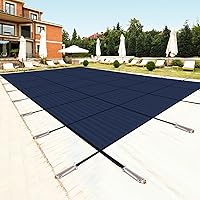
This cover is described as a mesh model with brass anchors and stainless steel springs. The stated fit includes a center step, so measure your pool and step area against the cover’s dimensions before choosing it.
A cover’s safety claims don’t replace careful installation or local requirements. The U.S.
Consumer Product Safety Commission shares pool safety guidance for owners.
Follow the cover manufacturer’s instructions, and keep other appropriate barriers and supervision in place.
What is a solid safety cover?
A solid safety cover is designed to secure across a pool while blocking water through the cover material. Like a mesh safety cover, it must attach to anchors around the pool and match the pool’s shape and size.
Because solid material doesn’t drain water through, you’ll need to manage rain and melting snow on top. Some setups use a cover pump for this job.
Check compatibility and cover instructions before relying on a pump.
Safety covers are distinct from solid winter covers that float or rest over a pool. Check how the product is designed to attach, and don’t assume a winter cover is safe to walk on or can hold a person.
If safety is your priority, compare the cover’s intended use, fit, anchor layout, installation requirements, and applicable standards. Our safety cover vs winter cover comparison explains why the names matter.
What does an automatic pool cover do?
An automatic pool cover opens and closes with a powered or assisted system, depending on its design. It can make daily covering easier, but it needs a compatible pool setup and professional planning for tracks, installation, and maintenance.
Automatic systems are often a larger commitment than a floating blanket. Check the opening dimensions, track location, power needs, service access, and compatibility with your pool before making a decision.
Don’t assume an automatic cover is a substitute for every other safety measure. Confirm the system’s intended use and instructions, and check local rules that apply to your pool.
Which types of pool covers fit inground pools?
Inground pools can use solar blankets, winter covers, mesh safety covers, solid safety covers, and some automatic systems. The pool’s shape, coping, deck, steps, and anchor locations determine which styles can fit.
A solar blanket generally floats on the water, so its dimensions should cover the water surface without interfering with normal use. A winter or safety cover needs enough material and the right attachment points to secure over the pool.
Measure the water area and the full outside edge where the cover will attach. Include built-in steps, unusual corners, and any deck features; see how to measure for a pool cover before selecting a size.
For a winter cover made for an inground pool, the UIRWAY option below is sized for a 20 x 40 ft rectangular pool. Its product details call for sizing up if the pool has built-in steps or isn’t rectangular.
If your pool has a nonstandard shape, confirm that the cover can fully cover it before you buy. For above ground pools, check the top rail and attachment method instead of applying inground sizing guidance.
Which pool covers fit above ground pools?
Above ground pools need covers sized for their pool diameter or dimensions, plus the right way to secure around the walls or top rail. A cover that is too tight can be hard to install, while excess material can complicate securing it.
Winter covers may use a cable and winch, cover clips, or another method described by the manufacturer. A solar cover floats on the water and may need trimming, while a safety cover depends on a compatible anchor setup.
Check whether the size refers to the pool it fits or the cover’s full dimensions. Overlap can make installation easier, but it must suit the pool’s rails and surrounding deck.
For an above ground winter option, see the best winter pool covers for above ground pools. For solar blankets, compare solar covers for above ground pools.
How do you choose a pool cover?
Choose by purpose first, then fit and upkeep. A solar cover suits heat retention, a winter cover suits seasonal closure, a safety cover suits a secured barrier, and an automatic cover suits easier routine covering when the pool can support its installation.
Use these questions to narrow the type:
- What do you want the cover to do? Separate heat retention, debris control, winter closure, and safety needs.
- What kind of pool do you have? Confirm inground or above ground compatibility.
- What shape and size is it? Measure the water surface and the attachment area.
- How does it secure? Check for a floating fit, cable, clips, anchors, springs, or a track.
- How will you manage water and debris? Plan for drainage or pumping where needed.
- Can you handle the cover? Think about storage, removal, and whether a reel or automatic system makes sense.
For a winter cover, decide whether you prefer mesh drainage or solid material and plan for the related upkeep. For a solar blanket, check how you’ll remove and store it when the pool is in use.
How do you care for and store a pool cover?
Follow the care instructions for the cover material and let it dry before storing it. Dirt, trapped water, and damp storage can make the next setup harder.
For a solar cover, clean it gently and keep it out of the way when swimming. A reel can make handling easier; read how to put a solar cover on a reel if that’s part of your setup.
Before storing a seasonal cover, remove debris and allow it to dry in a suitable place. Our guides explain how to clean a pool cover before storing it and how to fold a pool cover for storage.
At the end of winter, remove the cover when conditions and pool care plans allow. See when to remove a pool cover for the seasonal decision.
Which type of pool cover should you choose?
Pick a solar blanket if heat retention and evaporation control are your main goals. Choose a winter cover for seasonal closure, then decide between mesh drainage and solid material based on how you’ll manage water and debris.
Choose a safety cover when you need a secured barrier and can match its anchor system to your pool. Consider an automatic cover if easier routine use matters and your pool can support the installation.
Before you buy, match the cover to your pool type, dimensions, shape, and attachment points. Start with the pool cover fit guide, then compare the cover type that matches your main goal.
Frequently asked questions
What are the main types of pool covers?
The main types are solar covers, solid winter covers, mesh winter covers, safety covers, and automatic covers. Solar blankets float on the water to help retain heat and reduce evaporation.
Winter covers close a pool during the off-season, while safety covers anchor around the pool to create a barrier.
Are mesh or solid pool covers better for winter?
Mesh covers let rain and melting snow drain through, while solid covers block water from passing through the material. Mesh can reduce standing water on top, but debris and sunlight control differ by cover.
Compare the trade-offs in your climate and follow the cover maker's installation directions.
Can a solar pool cover keep a pool safe?
A floating solar cover is for heat retention and evaporation control, not a safety barrier. It can’t support a person or prevent access to the water.
If you need a barrier, compare covers designed and installed for pool safety, and check applicable local requirements.
Do pool covers fit both inground and above ground pools?
Some cover types are made for both pool styles, but the fit and attachment method still matter. Measure the pool, account for steps or rails, and check how the cover secures.
A cover sized for an inground pool may not fit an above ground pool safely or securely.
How do I choose the right pool cover?
Start with the job: choose a solar cover for heat retention, a winter cover for seasonal closure, a safety cover for a barrier, or an automatic cover for easier routine use. Then match the cover to the pool shape, size, attachment points, climate, and how you’ll manage water and debris.