How Do Pool Safety Covers Work?
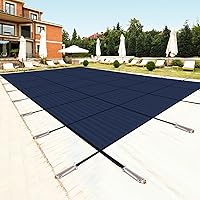
A pool safety cover works by anchoring to the deck and staying tight enough to hold weight on top. Straps run from the cover edge to brass anchors set in the concrete, and stainless steel springs keep the mesh or solid sheet taut so a person or pet who steps on it is supported.
On this page (8 sections)
- What parts make a safety cover hold weight?
- How does the mesh or solid sheet handle rain and snow?
- How do straps, springs and anchors share the load?
- What does "safety rated" actually mean on a pool cover?
- How do you install a safety cover so it works?
- Why do some mesh covers still need a pump?
- How do you care for a safety cover between seasons?
- What should you check before trusting a safety cover?
A pool safety cover works by turning the pool opening into a tight, anchored barrier. Straps run from the cover edge to brass anchors set in the deck, and stainless steel springs pull the sheet taut so weight on top spreads across the whole cover rather than one spot.
That is the core of how pool safety covers work, and it's why fit and tension matter more than the fabric alone.
The rest is detail: what the mesh or solid sheet does with rain, how the springs share load, and what you have to check each season. Here's how each part works together.
What parts make a safety cover hold weight?
A safety cover holds weight with four parts working as one: the cover fabric, the perimeter straps, the tension springs and the deck anchors. The fabric spreads the load, the straps pull outward, the springs absorb shock, and the anchors tie everything to the concrete.
Each strap runs from the cover edge to an anchor. The springs sit in line with the straps and keep constant pull on the sheet, so the cover stays flat instead of sagging into the water.
Brass anchors sit flush with the deck when not in use, which keeps the walking surface trip-free.
The VEVOR 18 x 36 ft cover shows the layout well. It's a 20 x 38 ft mesh sheet with a 2 ft overlap on each side, so the extra fabric covers the coping and the straps reach the anchors.
A 4 x 8 ft center step cutout fits around the pool's step area without gaps or loose edges.
That overlap and cutout are why sizing matters. Measure the pool, then add the margin the cover maker asks for.
How does the mesh or solid sheet handle rain and snow?
Mesh covers let water drain through, while solid covers hold water on top and need a pump. The mesh type stays lighter because rain and snowmelt pass through the tight weave and fall into the pool.
The VEVOR cover uses 165 g/m² polypropylene mesh. Its tight weave blocks leaves, debris and animals while letting water through, so you don't need a pump on top in normal weather.
Less sunlight reaches the water, which helps limit algae growth over winter.
A solid sheet keeps everything out and blocks light almost completely, but it collects rain. That standing water adds weight to the straps and springs and can pool in low spots.
Solid covers depend on a cover pump to stay safe and last.
Which type fits you depends on your winter. Snow-heavy regions often suit mesh because meltwater drains.
Leaf-heavy areas with little snow often suit solid for the cleanest spring opening.
How do straps, springs and anchors share the load?
The straps pull outward in a grid, and the springs keep steady tension so weight on the cover transfers to the deck. A person who steps on the cover pushes down in one spot, and the taut grid spreads that force to many anchors.
Springs matter because they stretch under load instead of snapping. That gives the cover some give and keeps the fabric from tearing at the seams.
The VEVOR cover uses 304 stainless steel springs and triple-stitched seams with double strapping, which reinforces the points that take the most pull.
Anchors must be set into sound concrete or pavers. A loose anchor or a cracked deck edge is the weak link in the whole system, no matter how strong the cover is.
Check each anchor at installation and again at the start of every season.
A cover that's installed too loose sags and collects water. One that's over-tightened puts extra strain on the seams.
The spring length in the maker's instructions tells you when the tension is right.
What does "safety rated" actually mean on a pool cover?
A safety-rated cover is built and labeled to a recognized standard for load and fall protection. For mesh and solid covers in the US, that's typically ASTM F1346, which sets requirements for how much weight the cover holds and how it resists a person falling through.
The VEVOR cover states ASTM F1346 and UL certification and supports up to 500 lb. That load figure means the cover, straps and anchors are meant to carry a person's weight across the opening, not just keep leaves out.
Be careful with covers sold as "winter covers." A winter cover keeps debris out and may be made of mesh or solid fabric, but it isn't built to hold a person's weight.
Our guide to the safety cover vs winter cover choice breaks down where each type belongs.
If your main goal is keeping the pool clean and safe all year, a rated safety cover is the right starting point. A cheap winter cover is not a fall barrier, even when it looks similar.
How do you install a safety cover so it works?
Drill and set the anchors first, then lay the cover flat and hook the springs in order. A cover only holds weight when every strap is hooked and tensioned, so don't skip corners or steps.
Start by measuring the pool and checking the cover's overlap. The VEVOR cover fits an 18 x 36 ft pool with a 4 x 8 ft center step and carries a 2 ft margin on each side.
Mark anchor points around the perimeter at the spacing the maker specifies.
Drill the holes, insert the brass anchors and clean out the dust. Lay the cover across the pool and step area, then hook each spring from one end to the other.
The spring-loaded design lets one person set it up and take it down each season.
A helper makes the first install easier on a large cover. Once the anchors are set, later seasons go faster.
How do the VEVOR and Lynkron covers differ?
The VEVOR cover suits a pool with a center step because of its cutout and stated 500 lb support. The Lynkron cover is a rectangular mesh sheet with triple stitching and double strapping, aimed at a plain rectangular pool.
Pick VEVOR when your pool has a center step or you want a stated load rating. Pick Lynkron for a simple rectangle and a lighter, easier sheet to handle.
Check the measured size against each cover's fit before you drill.
Why do some mesh covers still need a pump?
Even a mesh cover can collect water in heavy rain or a slow melt, so a pump clears the weight when the mesh can't keep up. A tight weave drains slowly, and a big storm can outpace it.
Standing water is the main enemy of a safety cover. It adds load, stretches the straps and can pull the springs past their working range.
A pump on top keeps the cover light and lets the mesh do its job.
The Little Giant APCP-1700 is a small automatic pump built for this. It starts in about 2 in of water and shuts off when the level falls to about 1 in.
Its 1/3 HP motor moves up to 1,745 GPH at a 1 ft lift, and the 25 ft cord reaches most outlets near a pool.
Set it in the lowest spot on the cover and run the hose away from the pool. Bring the pump indoors when temperatures drop below 32°F so water in the hose can't freeze.
How do you care for a safety cover between seasons?
Rinse off dirt before storage, dry the cover fully and keep it out of the sun. Clean fabric and dry springs last longer and are less likely to mildew.
Check the straps and seams for wear each spring. Look at the anchors for looseness and clear debris from the anchor wells.
Small repairs early beat a torn cover later.
Store the cover folded and dry in a cool spot, away from UV light. A storage bag helps keep pests and dirt off it.
The VEVOR kit includes a storage bag for this.
If your cover type isn't settled yet, compare the types of pool covers before you buy. A solar cover is a different tool, and you can read about how solar pool covers really work for the warm-season option.
For a motorized sheet instead of a strapped cover, see how automatic pool covers work.
What should you check before trusting a safety cover?
Check fit, tension, anchors and drainage, because those four decide whether the cover holds weight. A cover that's the wrong size or loose at the springs won't do its job, even if the fabric is strong.
Measure the pool and confirm the overlap matches the maker's sizing. Pull each spring to the length in the instructions.
Walk the perimeter and look for loose anchors and gaps around steps.
Clear standing water and keep the mesh free of packed leaves. Then decide: a rated mesh cover for a pool with steps, a solid cover for a leaf-heavy area with a pump on top, or a winter cover if you only need debris control.
That is how pool safety covers work in practice, and a careful fit is what makes the safety claim real.
Frequently asked questions
Can you walk on a mesh safety cover?
You can step on a properly installed, tensioned mesh cover, and the mesh lets water drain through so the surface doesn't pool. Treat it as a fall barrier rather than a trampoline, keep the cover tight, and never let children or pets use it as a play surface.
How much weight does a pool safety cover hold?
The VEVOR mesh cover is rated to support up to 500 lb, which is the kind of load figure a safety cover needs to meet. Real holding power depends on correct anchors, tight straps and sound decking around the pool, so a loose or worn cover won't reach its rating.
How long does a safety cover last?
A well-made cover with UV-resistant mesh or fabric and reinforced seams can last several winters when it's installed taut, cleaned before storage and kept out of the sun. Loose anchors and standing water shorten its life more than normal weather does.
Can one person install a safety cover?
Yes, one person can install a cover when the anchor holes are already drilled and the cover size matches the pool. The work is measuring the perimeter, drilling and inserting brass anchors, laying the cover flat and hooking each spring in turn.