Pool Cover Pump Not Working? What to Check First
If your pool cover pump isn't working, check its power, water depth, hose, and intake for a blockage. Unplug it before clearing debris, and use the manual to confirm its start and stop levels.
On this page (8 sections)
- Why is your pool cover pump not turning on?
- What should you check before inspecting the pump?
- Is the water too shallow for the pump to start?
- Why is the pump running without moving water?
- Why does the pump stop before the cover is dry?
- Could debris or cold weather be causing the problem?
- When should you replace a pool cover pump?
- What should you do if your pool cover pump still isn't working?
If your pool cover pump isn't working, check its power, water depth, hose, and intake for a blockage. Unplug the pump before clearing debris, and confirm its activation level in the manual.
Automatic pumps don't necessarily start as soon as a thin layer of water appears. Their sensors need a certain depth, and the pump may stop with some water still on the cover.
Why is your pool cover pump not turning on?
First check the outlet, cord, and water depth. A tripped GFCI outlet, loose plug, damaged cord, or water level below the activation point can keep a pump from starting.
Keep the plug and outlet dry. If the outlet's GFCI has tripped, follow its instructions to reset it only after checking for moisture or visible damage.
Don't handle a wet plug, cord, or outlet.
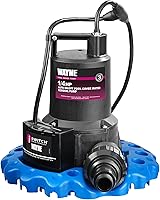
Automatic models have different start levels. The Wayne WAPC250 activates at or above 2 1/8 in, while the Aquastrong starts at 2.28 in; water shallower than those levels may not trigger them.
If the water is below the model's start point, don't assume the pump is broken. Read the manual for any approved manual activation steps, and don't force a switch or run the pump without enough water.
What should you check before inspecting the pump?
Unplug the pump before touching the intake, strainer, or hose connection. Keep the cord and plug out of standing water, and follow the pump's manual for safe handling.
Look for leaves, silt, or other debris around the strainer base and intake. A clogged intake can reduce water flow or prevent the pump from drawing water.
Check that the pump sits upright and that the hose isn't kinked or pinched. Keep the hose outlet positioned as the manual instructs, so water can drain away rather than flow back toward the cover.
Don't open the pump housing or reach inside for an impeller unless the manual specifically describes that maintenance. If the cord is damaged or the pump smells hot, stop using it.
Is the water too shallow for the pump to start?
Yes, shallow water can keep an automatic pool cover pump from activating. Each model has its own sensor level, so check its manual before deciding the pump has failed.
For example, the Wayne WAPC250's iSwitch starts at 2 1/8 in and shuts off at or below 3/4 in. Its maker also says that water below the start depth won't activate the switch, so manual activation is needed.
The Aquastrong starts at 2.28 in and has a secondary trigger at 2.87 in if its primary trigger fails. The 1500 GPH Automatic Pool Cover Pump is designed to start when water reaches 1 1/2 in and stop below 2/5 in.
These levels are model-specific. Don't use another pump's thresholds as a guide for yours, and don't try to defeat a sensor to make the pump run in shallow water.
For ways to remove standing water when a pump isn't the right fit, see how to siphon water off a pool cover. A siphon also needs a safe discharge point and enough hose length to drain away from the pool.
Why is the pump running without moving water?
Check for a blocked intake, kinked hose, or an outlet that sits too high. Unplug the pump first, then clear visible debris from the strainer and straighten the hose.
Make sure hose adapters are secure and compatible with your setup. Some pumps include a check valve to help reduce water flowing back through the hose, but not every model has one.
If the pump hums but doesn't move water, a stuck impeller or ice may be involved. Don't keep restarting it repeatedly; unplug it and follow the manufacturer's troubleshooting steps.
The Wayne WAPC250 includes a protection circuit that can shut the pump down if debris or ice locks its impeller. Wayne says the pump may cycle while trying to free the impeller, then remain off for a period; its instructions describe unplugging briefly to reset that delay.
Keep hands away from the impeller. If clearing the intake and hose doesn't restore normal flow, contact the maker or a qualified repair service rather than opening sealed electrical parts.
Why does the pump stop before the cover is dry?
Many automatic pumps stop when water falls below their sensor's shutoff level. A small amount of water may remain because the pump needs enough depth to keep running.
Check the manual for the pump's stop point and minimum operating depth. The Wayne WAPC250 shuts off at or below 3/4 in, while the 1500 GPH pump is described as stopping below 2/5 in.
A pump's stated low-water shutoff doesn't mean it can remove every drop. The cover's shape, folds, and sagging areas can leave puddles beyond the pump's reach.
Move the pump only while unplugged, and set it on a stable area where water collects. If the cover has a low spot away from the pump, repositioning it may help, as long as the cord and hose remain safely routed.
For prevention steps, read how to keep water off a pool cover. It covers cover support and other ways to limit pooling between pump checks.
Could debris or cold weather be causing the problem?
Debris and ice can block the intake or stop an impeller. Unplug the pump, inspect its strainer for leaves and silt, and let frozen parts thaw indoors if the manual allows.
Don't pour boiling water over a frozen pump or use direct heat. Electrical components and plastic parts can be damaged by heat or water intrusion.
Freeze protection is not permission to leave every pump outside in freezing weather. Wayne specifically says to remove the WAPC250 from service below freezing and store it indoors; follow your own model's instructions.
If you need a replacement, compare automatic pool cover pumps for models with automatic shutoff and sensor features. For an inground setup, see pool cover pumps for inground pools.
When should you replace a pool cover pump?
Replace or service the pump if it still won't run after safe checks, or if its cord or housing is damaged. Stop using it if you see exposed wires, melted plastic, repeated overheating, or water inside electrical parts.
A failed pump may be less urgent if the cover is holding only a small amount of water and you can remove it safely another way. Don't walk on a pool cover to reach a pump; use the method recommended for your cover.
The Wayne WAPC250 is one option if you want an automatic model with a stated 2 1/8 in activation point, 25 ft power cord, and 3-year warranty. The Aquastrong has a secondary trigger and a stated 2-year warranty, while the 1500 GPH model has a lower listed shutoff threshold of 2/5 in.
Compare the details in our pool cover pump guide before choosing. Match the pump's sensor levels, hose connection, and storage instructions to your cover and climate.
What should you do if your pool cover pump still isn't working?
If your pool cover pump is not working, verify power and water depth, then check the hose and intake with the pump unplugged. Stop troubleshooting if the cord or housing is damaged, or if the pump remains hot or makes an unusual sound.
Choose a manual-approved siphon if you need to remove water while arranging a repair. If you replace the pump, compare automatic models by their start and stop levels, hose setup, and cold-weather instructions.
Frequently asked questions
Why won't my pool cover pump turn on?
Check that the pump is plugged into a working, GFCI-protected outlet and that the water has reached its activation depth. Automatic models may not start in shallow water, and a blocked intake, stuck impeller, or damaged cord can also stop operation.
Unplug it before inspecting the pump.
Why does my pool cover pump keep turning on and off?
A pump may cycle as its sensor detects water, especially when only a small amount remains or water flows back through the hose. Check the manual for the model's start and stop levels, inspect the hose and check valve if fitted, and clear debris only with the pump unplugged.
Can a pool cover pump run dry?
Some pumps are designed to stop automatically at a low water level, but don't assume yours can run dry. Check its manual and remove it from service if the water is below its operating level.
Running a pump without enough water can damage some models.
Should I use a pool cover pump in freezing weather?
Follow the pump manual's temperature and storage instructions. Wayne says to remove the WAPC250 from service when temperatures drop below freezing and store it indoors, even though its iSwitch technology includes automatic freeze protection.
Ice can still block the intake or hose.