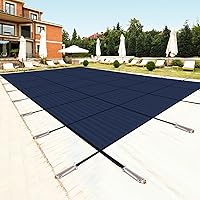
How to Keep a Pool Cover From Sagging
To keep a pool cover from sagging, fit it snugly and remove standing water before it builds weight. Pump the cover dry after rain, keep the edges tight, and clear snow before it soaks in or packs down.
On this page (9 sections)
- Why does a pool cover sag in the middle?
- How do you measure and fit a cover so it doesn't pool water?
- How do you keep water from pooling on top?
- How do you tension the edges and straps?
- What supports the middle of a wide cover?
- How do you handle snow before it makes the cover sag?
- Does the cover type change how much it sags?
- When should you replace a cover that keeps sagging?
- What's the simple routine for a cover that stays tight?
To keep a pool cover from sagging, fit it snugly and remove standing water before it builds weight. Pump the cover dry after rain, keep the edges tight, and clear snow before it soaks in or packs down.
Sagging rarely comes from one mistake. It builds from a cover that's slightly too big, edges that loosen over the season, and water or snow that sits until the cover stretches into a bowl.
Fix those three and most sagging stops.
Why does a pool cover sag in the middle?
A pool cover sags when weight collects faster than the cover can shed it, or when nothing under the cover carries that weight across the middle. Water and snow are the usual load, but fit and support decide whether the cover shrugs it off or stretches.
A cover that's too large leaves slack, and slack becomes a low spot. Water finds the low spot, and the low spot gets heavier.
That's the loop you want to break early, before the cover takes a set.
The cover's own span matters too. A wide above-ground pool with no center support asks the cover to bridge a long distance.
Even a tight cover dips when something heavy lands in the middle.
How do you measure and fit a cover so it doesn't pool water?
Measure the pool itself, not the old cover, and buy a size that pulls taut without stretching. A cover that's a foot too big will sag no matter how carefully you tie it down.
Measure the length and width at the widest point, including any coping or top rail the cover wraps around. For a round pool, measure across the center in two directions and use the larger figure.
Our guide to how to measure for a pool cover walks through round, oval and rectangular shapes.
An overlap cover needs extra material to wrap the rail, so measure the pool plus the overhang you want. An above-ground cover with a cable and winch pulls tight around the rail, so the fit matters more than the fabric's size on the box.
Check the fit on a dry day. Pull the cover across and see whether it touches the water or hangs above it.
A cover that rests on the water with slack at the edges will pool rain in the center.
How do you keep water from pooling on top?
Remove standing water as soon as it appears, before the weight stretches the cover. A cover pump that switches itself on is the easiest way to stay ahead of rain.
The Little Giant APCP-1700 activates in about 2 inches of water and shuts off when the level drops to about 1 inch. It has a 1/3 HP motor, a 25 ft cord and a 1 inch discharge with a 3/4 inch garden hose adapter, so it connects to a standard hose.
Place the pump at the lowest point of the sag, where water gathers. Keep the intake screen clear so the pump doesn't airlock, and bring the pump indoors when temperatures drop below 32°F so the hose doesn't freeze.
If you'd rather not use a pump, a long-handled brush or a weighted hose siphon can push or draw water toward the edge. Our post on how to keep water off a pool cover covers the pump-free options in more detail.
When should you use a pump instead of a brush?
Use a pump when the water is more than a shallow film. A brush moves water toward the edge, but on a big cover you'll be pushing the same puddle for a while.
Use a brush or a soft broom for a thin film or for leaves and debris. A pump handles the bulk, then you finish the edges by hand.
Skip the pump only if you check the cover often and can sweep after every rain. Most people find the pump less work over a whole season.
How do you tension the edges and straps?
Tighten the cover evenly around the whole perimeter, not just at the corners. Pull the cable or winch a little at a time and check the fit as you go.
For an above-ground pool, the cable and winch should pull the cover snug against the top rail without crushing the rail or stretching the fabric. Tighten in small steps, working around the pool so one side doesn't pull tighter than the other.
For an in-ground pool with straps or anchors, check each strap and take up slack where the cover has loosened. Re-tension after the first cold snap, because covers relax as temperatures drop.
Don't over-tighten. A cover pulled too hard can tear at the seams or pull the anchors loose.
Snug and even beats drum-tight.
What supports the middle of a wide cover?
A cover that spans a wide pool needs center support so water doesn't push it down into a bowl. An air pillow or a cover support under the middle carries the load and helps water run to the edges.
An air pillow sits under the cover and lifts the center so rain and snow slide off. Inflate it only partway so it has some give, and tie it so it stays centered.
For an above-ground pool, the pillow also takes pressure off the walls when the cover fills with water.
Some covers have a built-in support or a raised center panel. Check what your cover was designed to use before adding an air pillow or a support frame.
How do you handle snow before it makes the cover sag?
Clear snow before it packs down or turns to slush, because wet snow weighs far more than fresh powder. A cover that's already sagging under water will sag worse under snow.
Use a soft snow rake or a broom from the ground or deck. Never walk on the cover to clear it.
Push snow off in layers rather than trying to move a heavy drift in one pass. Our guide to how to remove snow from a pool cover covers safe tools and timing.
Clear the edges first so meltwater has somewhere to go. Then work from the center outward so you don't push snow into the pool's low spot.
Does the cover type change how much it sags?
Yes, the cover type changes how it handles water and weight. A solid cover holds water on top until you pump it off, while a mesh cover lets water drain through.
That difference decides how often you'll be out there.
A solid cover blocks sunlight and keeps debris out, but it needs a pump or a drain panel and careful tensioning. A mesh cover drains on its own but can still sag if it's too big or the edges are loose.
Our comparison of mesh vs solid pool cover helps you pick based on how much maintenance you want.
Either type sags for the same basic reasons: slack fit, loose edges and weight that isn't removed. Match the cover to your pool and your willingness to clear it, and the sagging problem gets smaller.
Which roller helps keep an above-ground cover tight?
A reel keeps the cover off the ground and stores it taut, which helps the cover keep its shape between uses. It also makes it easier to pull the cover evenly when you put it back on.
The VINGLI 16 ft roller uses seven aluminum tube sections that adjust to pools from 5 ft to 16 ft wide. The maker recommends it for covers under 12 mil, and it comes with two fixing bases, one for a concrete deck and one for an above-ground pool wall.
The Intex reel is made for rectangular frame pools 9 to 16 ft wide and attaches to the frame. It has a locking handle that stops the cover unrolling on its own, and its aluminum shaft is built to last.
A reel doesn't fix a cover that's the wrong size, but it stops the cover from sitting in a heap and creasing. That keeps the edges straighter when you put it back on.
When should you replace a cover that keeps sagging?
Replace the cover when the sag comes from wear, not fit. A cover that has stretched, torn at the seams or lost its edge reinforcement won't hold tension no matter how you adjust it.
Look for stretched material around the seams, a cable that won't tighten, or a cover that hangs below the water line even when empty. Those are signs the fabric has given up.
If the cover is the right size and still sags, the fix is support and water removal, not a new cover. Check the fit first, then the tension, then the support under the middle.
What's the simple routine for a cover that stays tight?
To keep a pool cover from sagging, check the fit once, then stay ahead of the weight. Pump or sweep water after rain, clear snow before it packs, and re-tension the edges after the first cold snap.
Start with the right size, measured to the pool. Add center support on a wide span, and keep a pump at the low point so water never sits long enough to stretch the fabric.
If you're still choosing a cover, read mesh vs solid pool cover before you buy. A cover that matches your pool and your maintenance habits sags far less than one that fights both.
Frequently asked questions
How much water weight can make a pool cover sag?
Water is heavy, so even a shallow layer adds real load across a wide span. A cover that pools water in the middle keeps collecting more, so clear it as soon as you can after rain rather than waiting for a dry day.
Can I just tighten the edges to stop a cover sagging?
Tight edges help on a cover that's slightly loose, but tension alone won't fix a cover that's too big or a pool with a long unsupported span. Fit and support matter as much as how hard you pull the straps.
Should I use a cover pump or a shop vac after rain?
A cover pump is easier for standing water because it moves a lot of water without you holding a hose. A wet/dry vacuum works for small puddles, but you'll be lifting it and dumping it often on a big cover.
Is it safe to walk on a sagging pool cover?
No. A cover that's holding water or sitting low hides the pool edge and won't reliably hold a person's weight.
Use a long pole, a brush or a pump from the deck instead of stepping onto the cover.